September 16, 2026 · admin
How to Spot Fake Sneakers in South Africa: A 9-Point Check
The South African sneaker market has exploded over the last decade, and where there is demand there are replicas. Whether you are buying at a mall, a market in Braamfontein, or through an Instagram seller who only takes EFT, knowing what to look for protects your money.
Here are nine checks you can do in under two minutes.
1. Start with the price, not the shoe
A brand-new pair of Air Force 1s selling for R450 is not a bargain. It is a warning. Legitimate discounting happens on older colourways and end-of-season stock, but there is a floor. If a current-season release is listed at a third of retail, treat it as fake until proven otherwise.
2. Check the stitching density
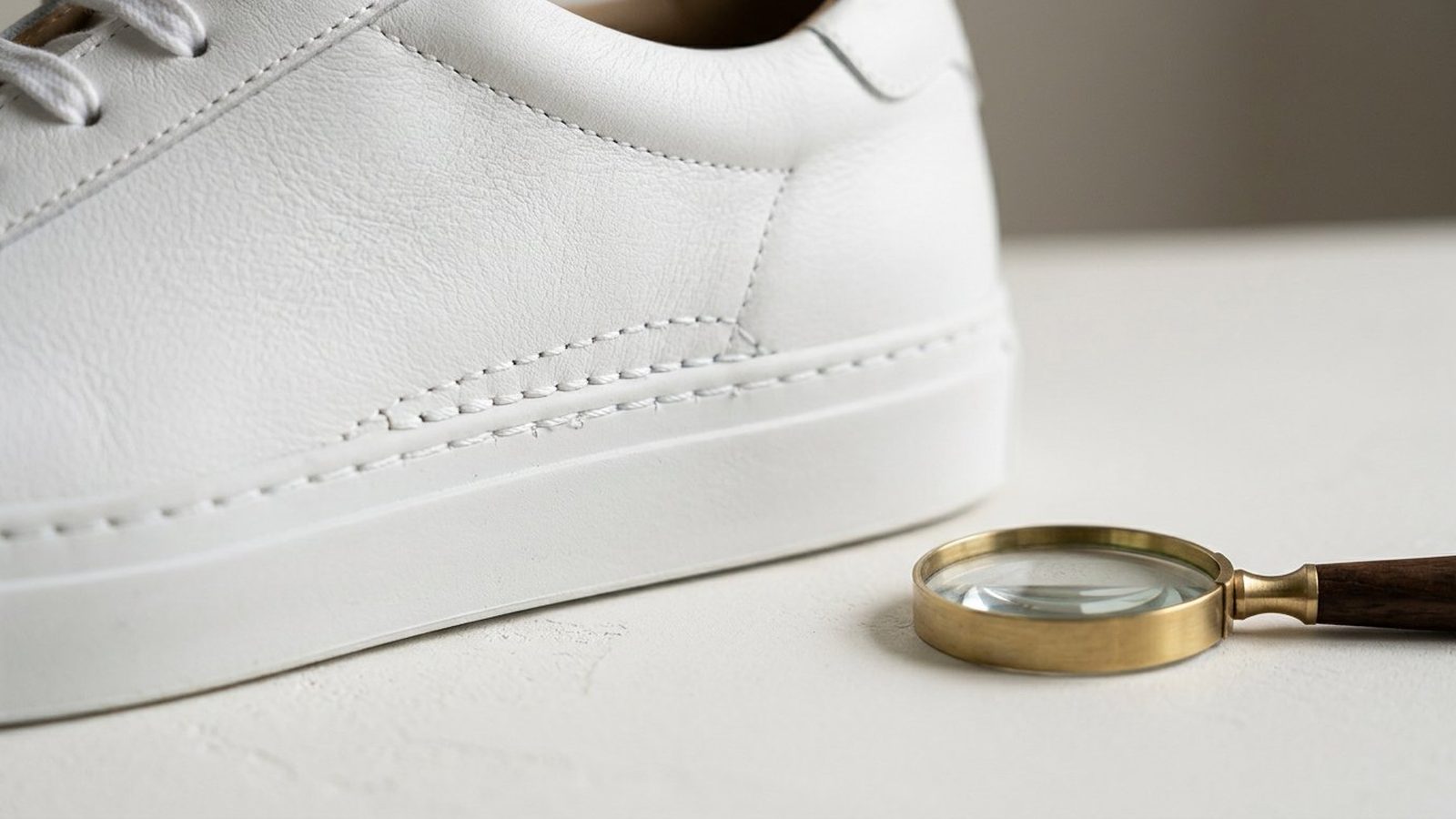
Turn the shoe over and look along the midsole seam. Genuine factory stitching is even, tight and runs in a consistent line. Replicas commonly show loose threads, skipped stitches, or a wandering line that drifts closer to the edge in places. This is the single most reliable tell because it is expensive to fake properly.
3. Smell the glue
It sounds strange, but it works. A harsh chemical solvent smell that hits you when you open the box is a red flag. Factory adhesives used by major brands have a much fainter odour that fades quickly.
4. Inspect the box label
The box label should carry a style code, a size, a colourway name and a barcode. Cross-check the style code against the shoe itself — the code on the label must match the code printed on the tongue tag inside the shoe. Mismatches are common on replicas because boxes and shoes are produced separately.
5. Read the tongue tag carefully
Look at font weight, letter spacing and alignment. Brands use consistent typography across production runs. Replica tags often have letters that sit slightly too close together, or a font weight that looks marginally too heavy. Compare against an official product image on your phone.
6. Feel the materials
Leather should feel supple and have a natural grain that varies slightly across the panel. Synthetic replicas often feel uniformly smooth, plasticky, or unusually stiff. Mesh should be tightly woven, not loose enough to catch a fingernail.
7. Check the insole
Lift the insole out. On genuine pairs the branding underneath is cleanly printed and the glue coverage is even. Replicas frequently have blotchy adhesive, or an insole that lifts out far too easily because it was barely tacked down.
8. Look at the heel counter shape
Place the shoes side by side on a flat surface and look at them from behind. Both heels should be symmetrical and sit upright. Replicas often lean slightly inward or outward because the internal heel counter is cut from cheaper material.
9. Assess the seller, not just the shoe
Ask whether they accept a secure payment method. A seller who insists on an EFT to a personal account, refuses to meet in a public place, or cannot answer a basic question about sizing is telling you something. Legitimate retailers offer a returns policy in writing.
Your rights if you are sold a fake
Under the Consumer Protection Act 68 of 2008, goods must match their description. If you are sold a counterfeit as genuine, you are entitled to a refund. Keep your proof of payment and any messages with the seller — they matter if you need to escalate.
The simpler route
Every pair in the RetroKicks catalogue is checked against supplier product data before it is listed, and everything ships with a 14-day return window. If a pair is not what you expected, send it back unworn in its original packaging.
Browse the current range and buy with a policy behind it.
